Cutting leather by hand: why every hide is different
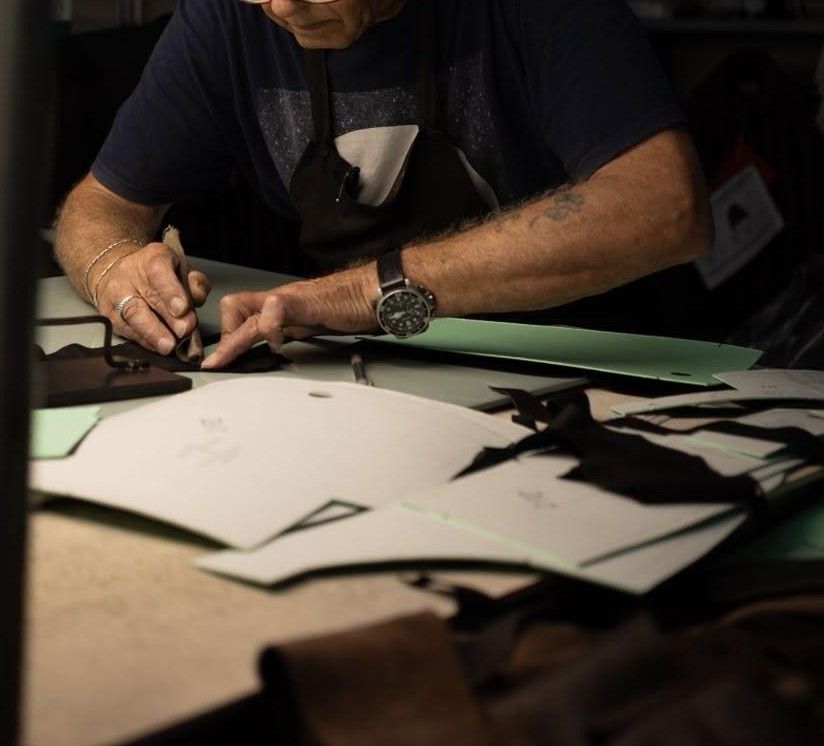
A roll of fabric is the same from start to finish. A hide isn't: it has an irregular shape, a thickness that changes from area to area, and the marks of the animal's life. That's why, in our workshop, leather is still largely cut by hand.
Reading the hide
Before cutting, the hide is laid out on the table and examined closely. The cutter looks for scratches, punctures, creases and color differences, and marks them. They know the center, the back, is the firmest and most even area, while the flanks and legs are softer and stretch more.
Where each piece goes
The most visible pieces, like fronts and sleeves, are cut from the best areas. Hidden parts, like undercollars and facings, can come from less perfect areas. The direction of the hide matters too, because it pulls differently depending on the direction.
Less waste
Leather is a precious material and shouldn't be wasted. A good cutter fits the pieces together like a puzzle to get the most out of every hide. It's a skill that comes from experience, learned over years at the cutting table.
Same garment, different hides
Two hides from the same lot can have slightly different shades. That's why we try to cut all the pieces of a garment from the same hide or from very similar ones, so the color stays even.
It's a slower way of working than automated cutting, but for quality leather garments it gives the best result.
Tell us about your garment.
Privacy and cookie policy
Sales +39 352 0628677
Shipping +39 049 9801868
30032 Fiesso d'Artico (VE)
Italy