From pattern to leather garment: the steps in our workshop
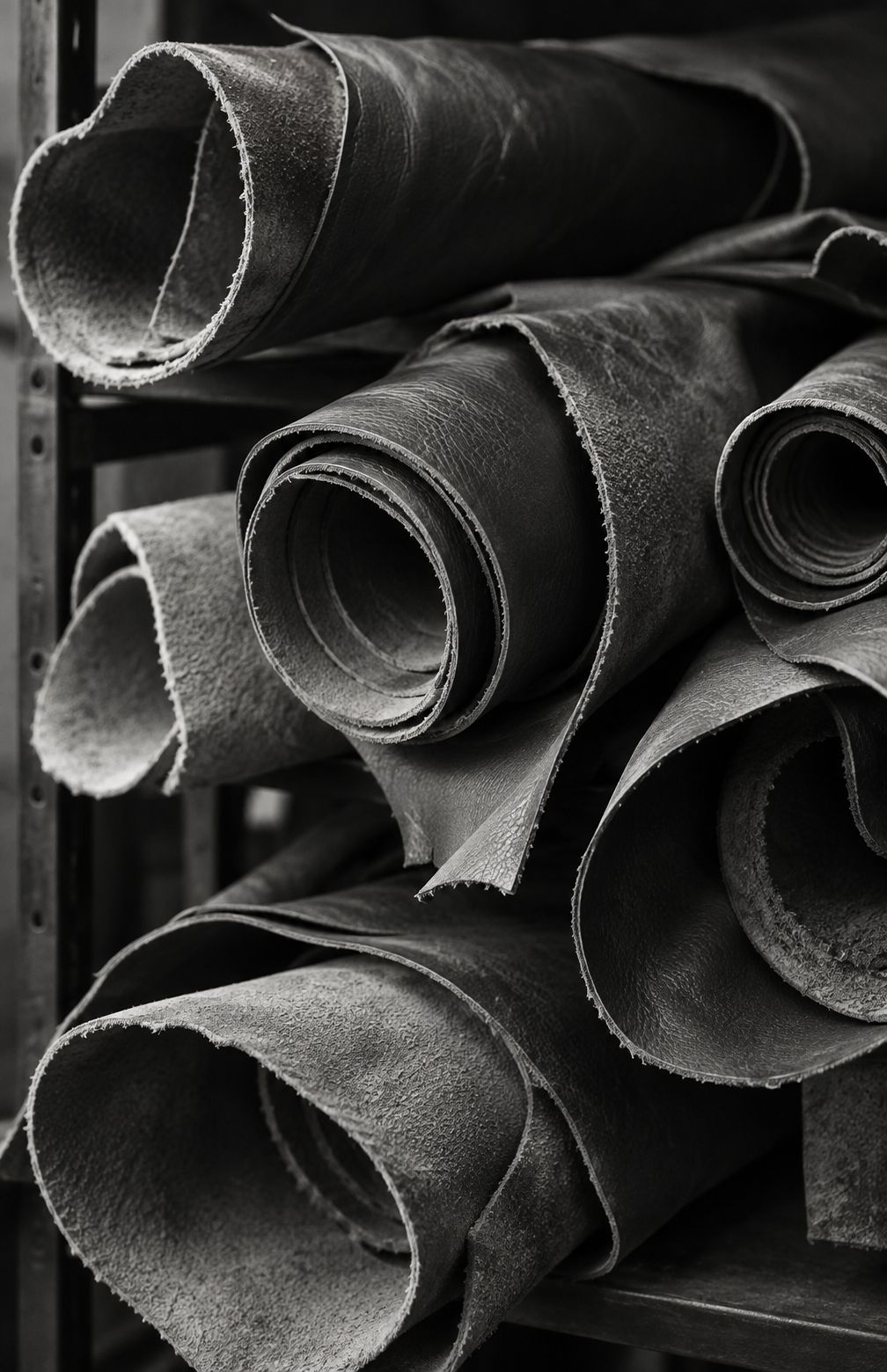
A leather garment starts out like any other, but with a few extra steps and less room for error: leather can't be unpicked and resewn like fabric, because every needle hole stays. That's why each step in our workshop gets the time it needs.
The pattern
We start from a sketch or a reference garment. In our CAD office we develop the pattern with the leather's behavior in mind: how much it gives, how thick it is, where it needs reinforcing. A pattern designed for fabric almost never works as-is in leather.
The prototype
Before production we always make a prototype. This is when we check fit, seams, linings and trims, and when the client gets to see and feel the result. Corrections happen here, on the pattern, not on the finished garment.
Selecting and cutting the hides
Every hide is checked under the light, one by one, to spot flaws, scars and color differences. Then it's cut, often by hand, placing the pieces so the most visible parts of the garment come from the best areas of the hide.
Sewing
In sewing we use needles, threads and machines suited to the thickness. Many steps are done by hand: gluing edges, flattening seams, finishing hems. They're slow, but they're what makes the difference between a garment that lasts for years and one that's worn out after a season.
Final inspection
Every garment goes through our inspection before it ships: we check the seams, the color, the feel of the leather and the measurements. If something isn't right, it goes back.
If you're thinking about a leather collection, tell us about your project: we'll explain how we'd make it and what you need to get started.
Tell us about your garment.
Privacy and cookie policy
Sales +39 352 0628677
Shipping +39 049 9801868
30032 Fiesso d'Artico (VE)
Italy